How Humidity Affects Exterior House Painting in Brownsburg, IN
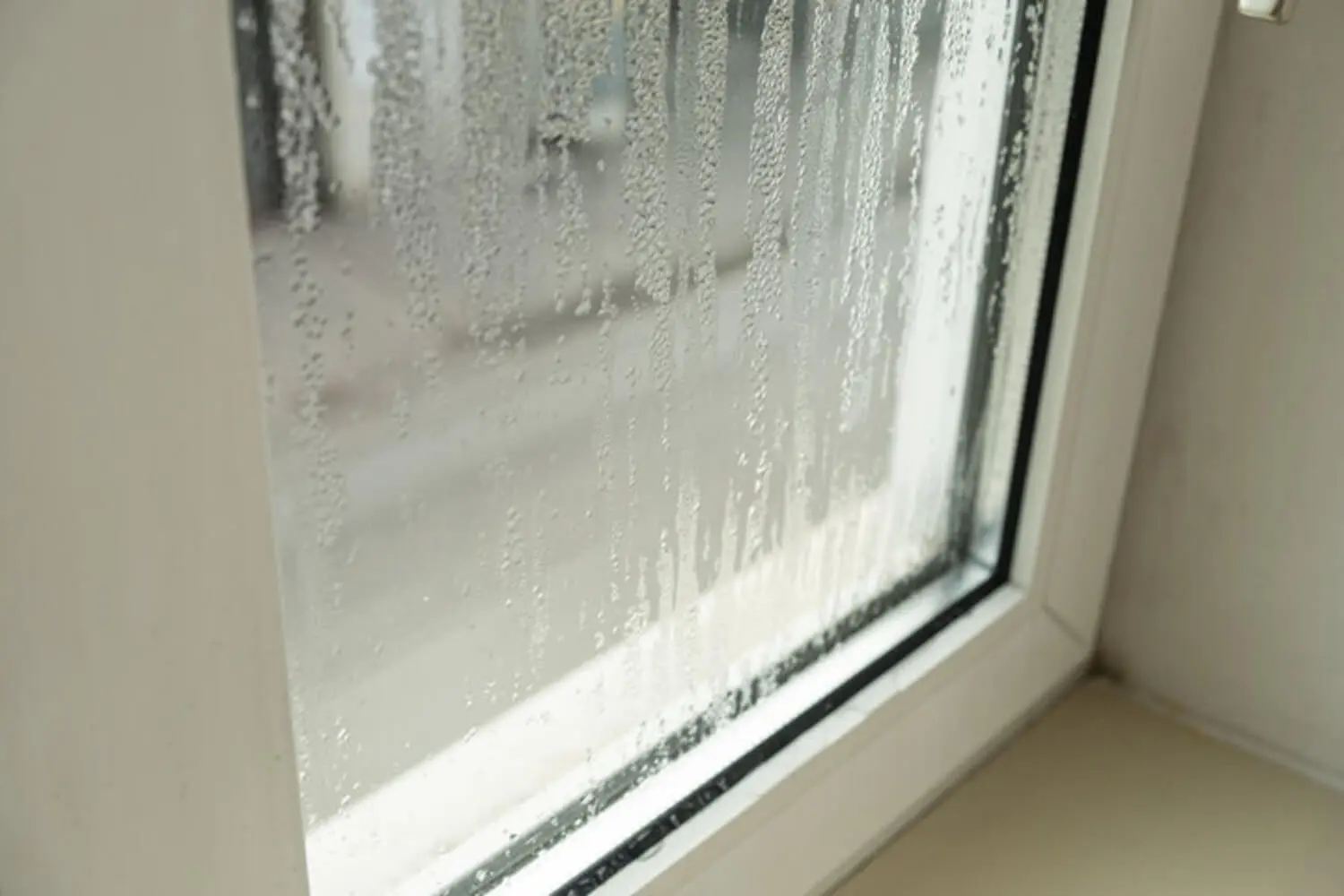
When homeowners in Brownsburg plan an exterior painting project, humidity is rarely on the checklist. Rain gets checked. Temperature gets checked. Humidity tends to come up only when a contractor postpones a start date or a paint job fails earlier than it should have.
That is usually when the questions start. And the answer is almost always the same — moisture conditions on the day the paint went on were not right.
Humidity is not a scheduling inconvenience for exterior painting. It is a material condition that determines whether paint bonds correctly, dries properly, and holds up against Indiana weather over time. Brownsburg summers regularly push relative humidity into ranges that create real problems for exterior coatings. Understanding what is actually happening — at the film level, at the surface, and over the long term — is what allows you to make sense of why moisture conditions matter as much as they do.
What Humidity Does to Exterior Paint at the Film Level
Exterior paint cures through a process that depends on moisture leaving the paint film at a controlled rate. As water evaporates from the coating, the film forms and hardens into the protective layer it is designed to be. When ambient humidity is high, that evaporation slows or stalls. The paint cannot release moisture fast enough, and the film cannot form correctly as a result.
This is not simply a matter of the paint taking longer to dry. The film-forming process determines the structural integrity of the finished coating. A film that forms under high humidity conditions ends up softer, less uniform, and more porous than one that cures under acceptable conditions. The surface may feel dry to the touch while the coating beneath it remains chemically incomplete.
How Moisture Slows and Disrupts the Drying Process
Paint dries as water evaporates from the coating. High relative humidity means the surrounding air already holds a high concentration of water vapor, which reduces the pressure differential that pulls moisture out of the film. The result is a significantly extended drying window — sometimes hours longer than the product label specifies under normal conditions.
A wet paint film sitting on an exterior surface is exposed to everything the environment throws at it:
- Vertical surfaces can sag or run before the film stabilizes
- Airborne debris and insects adhere to the wet coating
- Temperature changes in the late afternoon or evening can stress a film that has not yet set
There is also a less obvious risk. Paint that appears dry to the touch in high humidity may not have completed the deeper curing process. An inexperienced painter — or a homeowner watching the job — may assume the first coat is ready for a second application when the film has not actually set. Applying a second coat over an incompletely cured first coat traps moisture between the layers. The failure that follows can take weeks to appear, and by then it looks like a workmanship problem rather than a moisture problem.
The Dew Point and Why It Matters More Than Humidity Readings Alone
Relative humidity is the measure most people are familiar with. But for exterior painting, dew point is the more useful number.
Dew point is the temperature at which the air becomes saturated and moisture begins to condense onto surfaces. Dew point gives painters a more precise indicator of safe conditions than a humidity percentage alone, because it accounts for both the moisture content of the air and the temperature of the surface itself.
A surface temperature at or near the dew point will have condensation on it. Sometimes that condensation is visible as beading or a wet sheen. Often it is not visible at all. Paint applied to a surface with condensation present does not bond to the substrate. It bonds to the moisture layer, which eventually evaporates and leaves the paint film detached from the surface beneath it.
The practical rule professional painters use: surface temperature must be at least 5 degrees Fahrenheit above the dew point before painting can begin. In Brownsburg, this matters most on summer mornings. Overnight temperatures drop, humidity climbs, and shaded or north-facing walls can sit at or near the dew point well into mid-morning — even on a day that looks perfectly acceptable on a weather app.
How Humidity Affects Paint Adhesion to the Surface
Adhesion is the physical and chemical bond between the paint film and the substrate it is applied to. Humidity attacks that bond through two distinct pathways. The first is moisture already present on the surface before painting begins. The second is ambient humidity in the air during application and curing. Both matter, and both create different failure modes.
Moisture on the Surface Before Painting Begins
A surface that has absorbed moisture from overnight dew, recent rain, or morning condensation presents a barrier between the paint and the substrate. The paint bonds to the moisture layer rather than to the surface material itself.
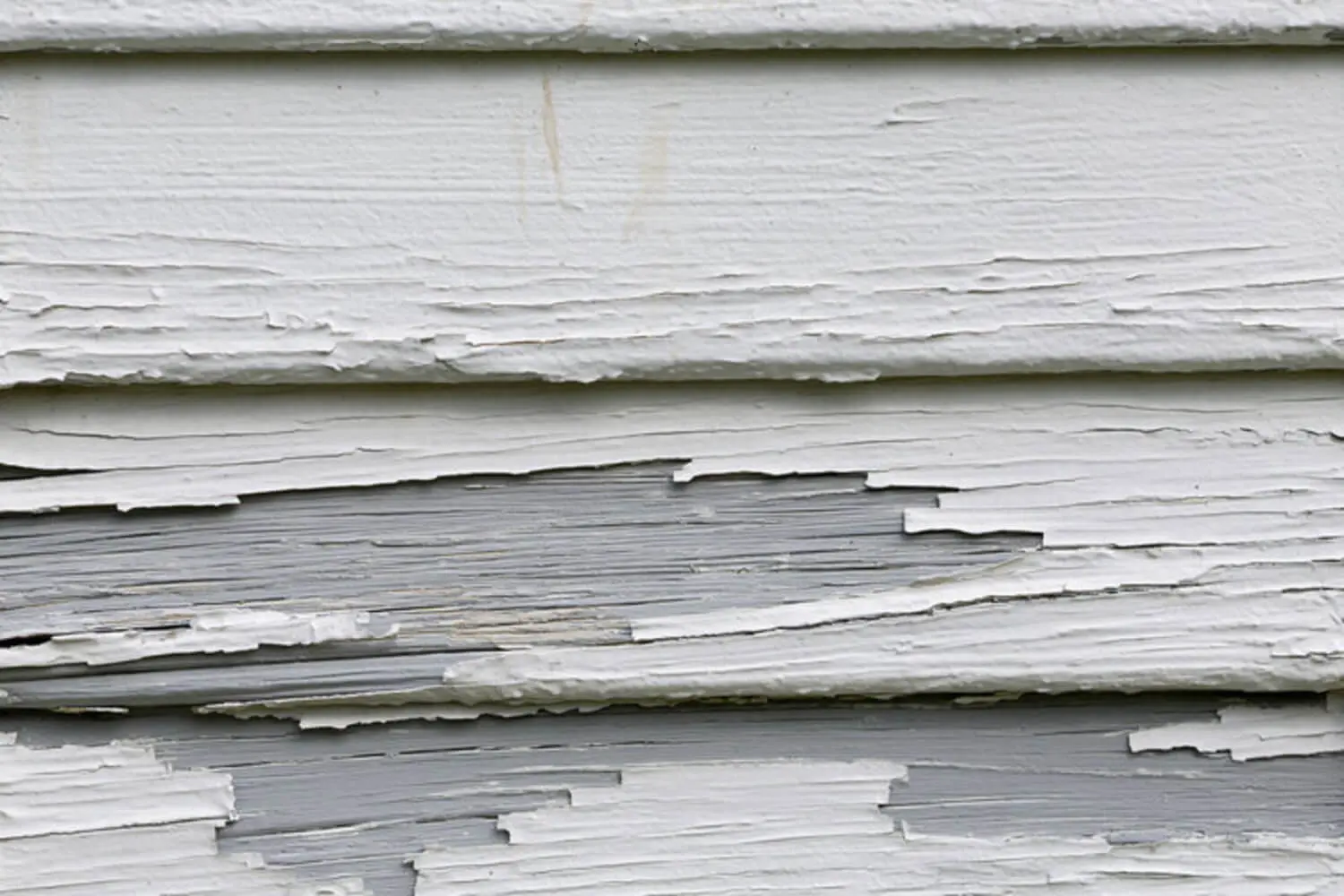
Adhesion failures from surface moisture do not always appear during the job. The paint can look fine for several weeks before the bond deteriorates and peeling or lifting begins. Once that happens, tracing the failure back to surface moisture conditions on the day of application is difficult.
Wood siding is especially vulnerable to this on humid Brownsburg mornings. Wood absorbs and holds moisture — a board that looks dry on the surface can still carry significant moisture content inside the grain. Paint applied over wood in that condition is at high risk of the kind of blistering described in this overview of what causes bubbling paint on exterior surfaces, where trapped moisture forces its way outward through the film as the surface heats up.
Ambient Humidity During Application and Curing
Even on a surface that is dry to the touch, high ambient humidity degrades adhesion during application. When relative humidity exceeds acceptable thresholds, the paint film begins absorbing moisture from the air as it cures. That moisture competes with the bonding process and produces a weaker, less consistent adhesion across the painted surface.
Most exterior paint manufacturers specify a maximum relative humidity of 85 percent for application. Above that threshold, conditions actively work against the paint’s ability to cure into a properly bonded film. In practice, professional painters start monitoring closely above 70 to 75 percent and factor both the current reading and the curing window forecast into their decisions.
Adhesion failure from ambient humidity tends to be inconsistent rather than uniform. Depending on sun exposure, surface material, and micro-variations in humidity across different elevations of the house, some areas may bond correctly while others do not. The result is a finish that fails in patches and looks like uneven workmanship rather than a weather-related adhesion problem.
The Long-Term Durability Consequences of Painting in High Humidity
Adhesion failures and film defects caused by high humidity do not always show up immediately. Many of the most significant durability problems emerge weeks or months after the project is complete, when weather cycles begin stressing a coating that never formed correctly.
The most common long-term consequences include:
- Blistering — blisters form when moisture trapped beneath or within the paint film turns to vapor as the surface heats up under direct sun. The vapor pressure forces the film away from the substrate in localized bubbles. A paint job applied in high humidity is significantly more likely to blister the following summer because the film formed with trapped moisture already present.
- Peeling — peeling is adhesion failure progressing over time. A bond weakened by humidity during application may hold initially but degrades as the paint film expands and contracts through seasonal temperature changes. A paint job that looks clean in September can be actively peeling by the following April.
- Mildew growth — when a paint film forms in high humidity conditions it remains more porous than intended. That porousness allows moisture to collect in the surface of the coating over time, creating conditions where mildew can establish and spread. Brownsburg’s humid summers continue to stress the compromised film after the paint job is complete, which accelerates biological growth on a surface that was already more vulnerable than it should have been.
The financial consequence is straightforward. A paint job that fails prematurely requires a full recoat sooner than the homeowner planned. The cost of labor and materials gets paid twice for what should have been a single project.
What Brownsburg Summers Mean for Exterior Painting Schedules
Brownsburg and the broader Indianapolis area see relative humidity levels that regularly exceed 70 percent during summer mornings, particularly through June, July, and August. Overnight humidity frequently climbs above 80 to 85 percent as temperatures drop, which means morning surface conditions are often problematic even on days that carry a favorable afternoon forecast.
Professional exterior painters in this region account for this in ways that go beyond checking whether rain is in the forecast. Before work begins on any given morning, they are monitoring:
- Current relative humidity readings
- Dew point forecast for the morning and into the evening curing window
- Surface temperature on each elevation of the house
- Whether overnight dew has lifted from north-facing walls, shaded siding, and wood trim
Indiana summers frequently produce heavy overnight dew on surfaces that cool quickly after sunset. North-facing walls and shaded siding can hold that moisture well into late morning, compressing the usable painting window for the day.
A project that could theoretically be completed in two days of labor may stretch across four or five calendar days during a humid stretch in July. That is not a sign that something has gone wrong. It is the expected result of a contractor managing moisture conditions correctly. Understanding the timing and seasonal conditions that shape exterior painting schedules in this region helps set realistic expectations before a project begins.
How Professional Painters Evaluate Moisture Conditions Before Starting
A responsible pre-project moisture assessment does not rely on a weather app. It involves a set of specific checks that confirm whether conditions at the point of application are actually acceptable — not just whether the day looks good from a general forecast.
Those checks typically include:
- Surface temperature — measured with an infrared thermometer on each wall elevation, not assumed from air temperature. A shaded wall that has been cool overnight may be at or near the dew point even when the air feels warm and dry.
- Relative humidity — current reading checked against the acceptable range for the product being applied.
- Dew point comparison — surface temperature confirmed to be at least 5 degrees above the dew point on every surface to be painted that day.
- Curing window forecast — humidity and temperature conditions evaluated not just for application hours but for the full curing period extending into the evening and overnight.
If humidity is forecast to spike before the applied coat has had adequate time to cure, the project should not proceed — regardless of what the morning looks like when the crew arrives.
Understanding what this assessment involves gives you a basis for evaluating any contractor you bring in for an exterior painting project. A contractor who performs these checks before starting is operating at a professional standard. One who simply shows up and begins painting regardless of morning conditions is not.
Moisture Conditions Matter as Much as the Paint Itself
You came into this knowing that humidity had something to do with painting. You now understand what it actually does. Humidity determines whether the coating forms correctly, whether it bonds to the surface, and whether it holds up through the seasonal stress of an Indiana climate. That is a different kind of problem than a scheduling inconvenience — and it calls for a different kind of attention from the contractor managing your project.
For homeowners in Brownsburg planning an exterior repaint, that means working with a contractor who evaluates moisture conditions before the work begins rather than one who schedules around rain and leaves humidity to chance. The condition of your home’s exterior surfaces and the conditions on the day the paint goes on are both inputs into how long the finished job lasts.
Integrity in Blue evaluates surface temperature, dew point, relative humidity, and the full curing window forecast before any exterior painting work begins. That evaluation is part of what every project requires to be backed by the 24-month Blue Guarantee.
If you are planning an exterior painting project in Brownsburg or the surrounding Indianapolis area, reach out to Integrity in Blue today to schedule a consultation.