What Causes Bubbling Paint on Exterior House Surfaces?
Few things are more frustrating than stepping back to admire a freshly painted exterior, only to notice small bubbles forming across the surface. What looked smooth and uniform yesterday now appears uneven and flawed. It naturally leads to the question: what causes bubbling paint on exterior walls?
Bubbling isn’t just a cosmetic issue. It often signals that something went wrong beneath the surface. Left unaddressed, those small blisters can expand, crack, and eventually peel, shortening the life of the entire paint job. In some cases, bubbling even points to moisture problems that extend beyond the paint itself.
Understanding why it happens is the first step toward preventing it. In this article, we’ll break down the most common causes behind bubbling exterior paint, explain how weather and surface conditions affect performance, and clarify why proper preparation and timing matter more than most homeowners realize.
What Is Bubbling Paint?
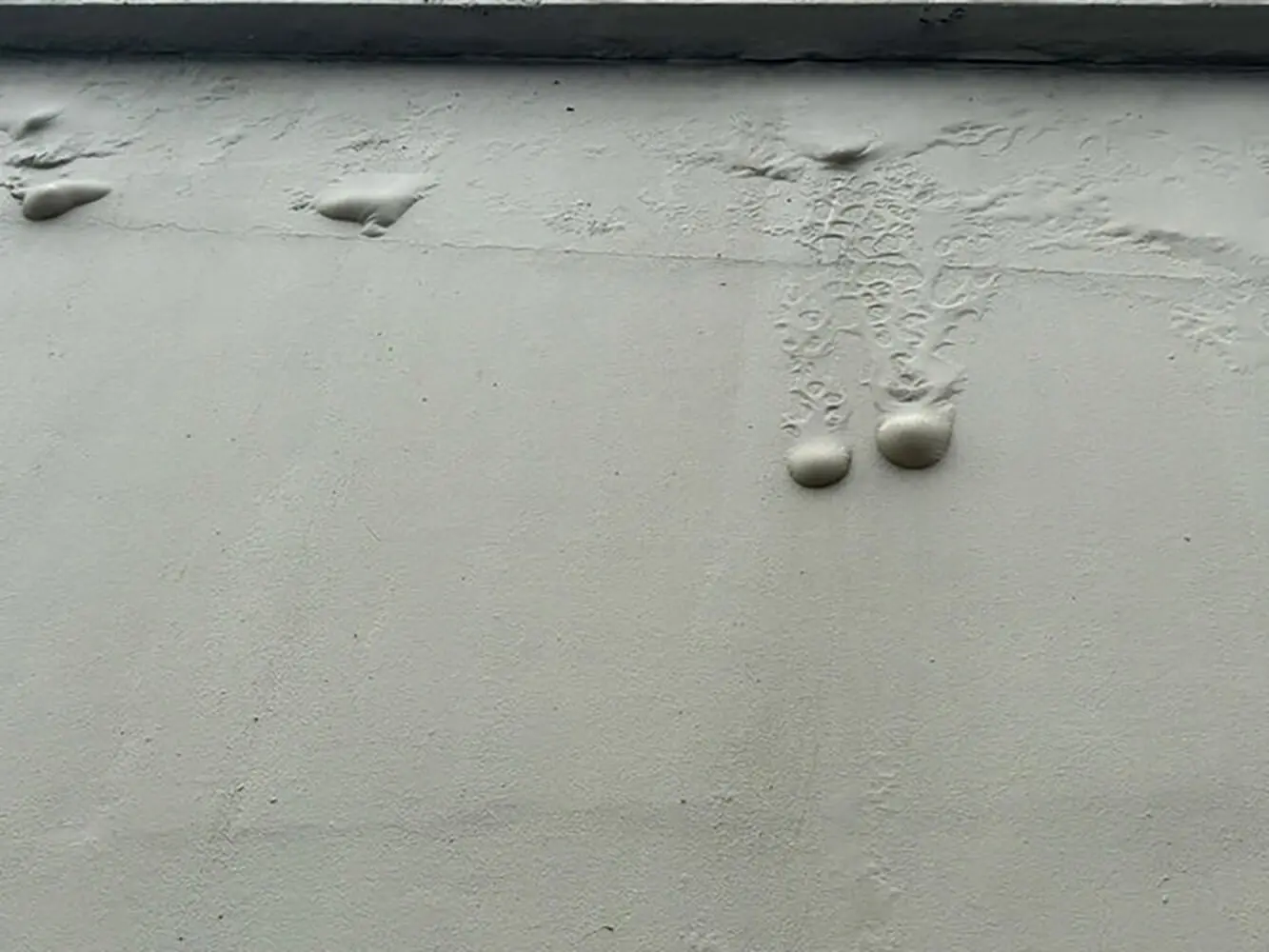
Bubbling paint, sometimes called blistering, appears as raised pockets or small domes that form beneath the surface of the paint film.
These bubbles can vary in size. Some look like tiny pimples, while others expand into larger blisters that eventually crack or peel.
At its core, bubbling happens when the paint loses proper adhesion to the surface underneath. Instead of bonding tightly to siding or trim, the paint lifts away, trapping air or moisture beneath it.
Here’s how it typically forms:
- Moisture or heat builds up under the painted surface
- The pressure pushes against the underside of the paint film
- The paint separates from the surface, creating a visible bubble
In many cases, the issue starts before the paint ever dries. If the surface was damp, dirty, or improperly prepared, the paint cannot fully attach. As temperatures change or humidity rises, that weak bond becomes more obvious.
Bubbling is rarely random. It’s usually a sign of either moisture intrusion or paint adhesion problems outside.
When bubbles appear, it’s the coating’s way of signaling that something beneath the surface needs attention.
The Most Common Reasons Exterior Paint Bubbles
When homeowners ask what causes bubbling paint on exterior walls, the answer usually traces back to a handful of predictable issues.
In most cases, the paint itself is not the main problem. The conditions beneath it are.
Moisture is one of the most frequent underlying causes.
Exterior surfaces constantly face rain, humidity, irrigation spray, and condensation. If moisture gets trapped inside siding or trim and cannot escape, pressure builds beneath the paint film. That pressure eventually forms blisters.
Common moisture-related triggers include:
- Painting over damp wood or siding
- Failing to allow surfaces to fully dry after pressure washing
- Leaks around windows, doors, or trim
- Poor ventilation inside walls that allows vapor buildup
Even if the surface feels dry to the touch, hidden moisture can still be present below.
Another major factor involves painting over compromised surfaces.
If loose, peeling, or chalky paint is not fully removed, new paint cannot properly bond. Instead of adhering to a solid base, it attaches to unstable material. Over time, that weak layer separates and creates bubbles.
Surface bonding problems often stem from:
- Skipping scraping and sanding
- Applying paint over dirt, dust, or mildew
- Using the wrong primer or skipping primer altogether
- Painting glossy surfaces without proper preparation
These are among the most common exterior paint blistering causes. In short, bubbling usually points to either trapped moisture or poor adhesion. Both problems originate long before the bubbles become visible.
How Weather and Timing Play a Role
Even when surfaces are properly prepared, weather conditions can still interfere with how well paint performs. Exterior paint is designed to cure under specific temperature and humidity ranges. When those conditions are ignored, problems often follow.
Heat is a major factor. When paint is applied in direct sunlight or on surfaces that are already hot to the touch, the outer layer can dry too quickly. This rapid surface drying traps solvents or moisture underneath. As the trapped material tries to escape, pressure builds and the paint film lifts, which is one reason why exterior paint bubbles after application.
Humidity presents a different challenge. High moisture levels in the air slow down drying and can prevent paint from curing properly. If the coating cannot harden evenly, adhesion weakens and blistering becomes more likely. In humid climates, even slight timing mistakes can affect long-term durability.
Temperature swings also matter. Painting late in the day when temperatures drop quickly can lead to condensation forming on the surface before the paint fully cures. That thin layer of moisture can disrupt bonding and create bubbling that may not appear until days later.
Exterior painting is not just about applying color. It is about choosing the right window of time so the coating can bond, cure, and perform as intended.
Why Bubbling Paint Shouldn’t Be Ignored
At first glance, a few bubbles might not seem like a major concern.
They may look small and isolated, especially if the rest of the surface still appears intact.
However, bubbling is rarely a self-contained issue. It often marks the beginning of a larger breakdown in the paint system.
Once a bubble forms, the protective seal between the paint and the surface has already been compromised. That separation creates an entry point for additional moisture. As water works its way underneath, the blister can expand, crack, and eventually peel.
Over time, what started as minor bubbling can turn into widespread paint failure.
Peeling paint exposes the underlying material to the elements. On wood surfaces, that can lead to:
- Increased moisture absorption
- Swelling and warping
- Rot and long-term structural damage
On siding and trim, it can shorten the lifespan of both the paint and the substrate itself.
Bubbling is also closely tied to paint adhesion problems outside. When the coating cannot properly bond, it loses its ability to protect. Sun exposure, rain, and temperature changes will accelerate the breakdown.
Ignoring bubbling allows small issues to compound. Addressing it early helps prevent larger repairs and preserves the durability of the entire exterior finish.
How to Prevent Bubbling in Exterior Painting Projects
Preventing bubbling starts long before the first coat of paint is applied. A durable finish depends on careful evaluation, thorough preparation, and the right application conditions.
The first priority is identifying and addressing moisture. Surfaces must be completely dry before painting begins. After pressure washing, siding and trim need adequate drying time, which can vary depending on weather and material type. In some cases, moisture meters are used to confirm that wood has reached an acceptable moisture level before coating.
Proper surface preparation is equally important. Loose or peeling paint must be fully scraped away. Glossy areas should be sanded to create texture that allows new paint to bond. Dirt, mildew, and chalky residue need to be removed so the coating attaches directly to a stable surface rather than a contaminant layer.
Primer selection also plays a key role. The correct primer helps seal porous materials, improve adhesion, and create a consistent base for topcoats. Skipping primer or using the wrong product can increase the likelihood of future bubbling.
Timing matters just as much as preparation. Professional crews plan around temperature ranges, humidity levels, and sun exposure. Painting is scheduled when surfaces are not overheated and when conditions allow proper curing.
When each of these steps is handled carefully, the risk of bubbling decreases significantly. A methodical process protects both the appearance and longevity of the exterior finish.
Addressing Bubbling Before It Becomes Peeling
Bubbling paint rarely appears without a reason.
In most cases, it traces back to moisture intrusion, surface bonding issues, or application conditions that were not ideal at the time of painting.
When asking what causes bubbling paint on exterior walls, the answer almost always involves one of three core factors: trapped moisture beneath the surface, inadequate preparation that weakens adhesion, or environmental conditions that interfered with proper curing.
What makes bubbling especially important to address is that it often signals an early-stage problem. The paint film has already separated from the surface, even if peeling has not yet begun. Left alone, that separation widens. Moisture can continue to enter, and the coating will gradually crack, flake, and fail.
Catching bubbling early allows the underlying issue to be evaluated and corrected before widespread damage occurs. In some cases, isolated areas can be repaired after resolving the root cause. In others, more extensive preparation may be required to restore a stable foundation.
The key is not just fixing the visible bubbles, but identifying why they formed in the first place. A long-lasting exterior finish depends on solving the source, not just the symptom.
If you are seeing bubbling, peeling, or early paint failure, it may be time for a professional evaluation. At Integrity In Blue, we focus on proper surface preparation, moisture control, and application timing to ensure your exterior paint performs the way it should. We take the time to address the root cause so your finish lasts longer and looks better. Contact us today to schedule an exterior painting consultation.